Most people who buy smart home gadgets do it for convenience. They want to turn off a lamp from the couch or check a camera while on vacation. Saving money on energy is usually an afterthought. That is a missed opportunity. The right devices, set up the right way, can cut a meaningful chunk out of your monthly utility bill without making your home less comfortable.
This article is not a list of every smart device on the market. It is a focused look at the categories that actually move the needle on energy use, what the real savings look like, and how to avoid the trap of buying a gadget that costs more to run than it saves.
Smart Thermostats Are the Clear Starting Point
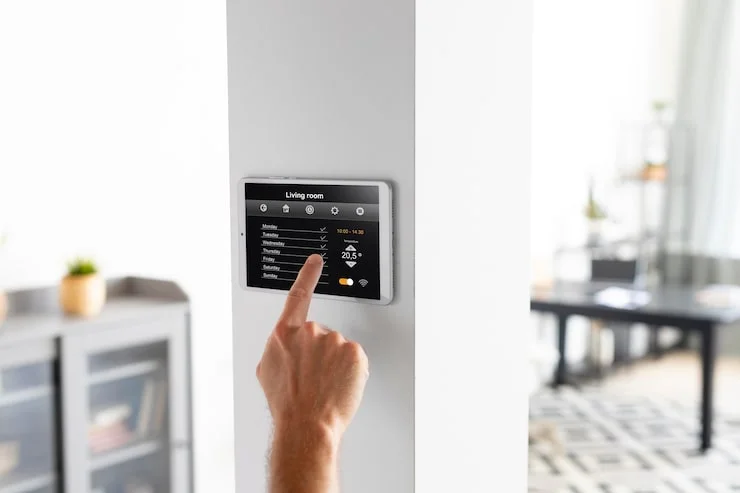
If you only buy one smart device for energy savings, make it a thermostat. Heating and cooling eat up almost half of the average American household's annual energy bill, which works out to more than $900 a year . No other category of smart device touches that much of your spending.
The savings come from two things. First, smart thermostats make it easy to stop heating or cooling an empty house. Features like geofencing detect when your phone leaves the area and automatically set the temperature back. Second, learning thermostats study your patterns and build a schedule without you having to program anything. They notice when you wake up, when you leave for work, and when you come home, then adjust accordingly .
The numbers here are not vague promises. Google reports that Nest users save an average of 12% to 15% per year without making other changes, which comes out to roughly $131 to $145 annually . Ecobee claims users can save up to 26% by installing one of their thermostats, though that is a high-end estimate that depends on how inefficient your current habits are . Even at the low end, a thermostat that costs $100 to $200 will pay for itself within a year or two, then keep saving money after that .
One detail worth knowing: you do not need the most expensive model. The Amazon Smart Thermostat costs less than $100 and still includes presence sensing and energy reports that explain your usage in plain language . The expensive models add nicer screens and more advanced sensors, but the core money-saving functions are available at the entry level.
Read Also: How AI Improves Medical Diagnosis India
Smart Plugs Fix a Problem You Cannot See
Standby power is the energy devices draw when they are "off" but still plugged in. Your television, game console, cable box, and computer monitors all keep sipping electricity around the clock so they can respond instantly when you press a button. It is a small amount per device, but it adds up quietly across an entire home.
A smart plug sits between the wall and the device and lets you cut power completely on a schedule. The key word is schedule. If you buy a smart plug and only use it to turn things on and off with your phone, you are wasting money. The plug itself draws one to two watts to maintain its Wi-Fi connection, so manual control means you are paying for a feature you are not using . Set a schedule and the math changes.
One person who tracked their setup found that their living room entertainment center drew about 25 watts in standby. That is roughly 220 kilowatt-hours a year, or $25 to $30, spent on nothing. After setting the plug to cut power at midnight and restore it in the afternoon, that cost disappeared . A home office setup with monitors and speakers added another $20 to $30 in annual savings from a single room .
The practical approach is to buy a few smart plugs and use them on the worst offenders. Game consoles, cable boxes, and desktop computer setups are the usual suspects. You can also use a smart plug with energy monitoring to find out which device in your home is the hidden power hog. Seeing the number in an app is often enough motivation to change how you use it.
Smart Lighting Saves Less Than You Think, but It Still Counts
Lighting is a smaller slice of the energy pie than heating or standby power. The Department of Energy puts residential lighting at around 5% of total electricity use. But smart lighting has a specific advantage: it eliminates the human error of leaving lights on.
The savings come from three features. Motion sensors turn lights off when a room is empty, which is useful in hallways, basements, and bathrooms. Geofencing turns everything off when you leave the house. Schedules make sure lights are not burning all day while you are at work .
The math on the bulbs themselves is straightforward. Replacing a 60-watt traditional bulb with a 7-watt LED saves about $30 per year per bulb if it runs 2.5 hours a day . Smart bulbs are LEDs, so you get that baseline savings automatically. The automation features add a little more on top by reducing wasted hours.
Be honest about the scale here. If you already have LED bulbs and you are good about turning lights off, smart lighting will not transform your bill. It is a comfort and convenience upgrade that happens to save a few dollars. The bigger wins are in heating, cooling, and standby power.
Smart Blinds and Shades Deserve More Attention
This category is less common in American homes than thermostats or plugs, but the research behind it is compelling. A study from the University of Malaga working with climate control company Airzone found that coordinating smart thermostats with automated blinds reduced heating and cooling energy use by 40% to 50% compared to traditional systems .
The logic is simple. In summer, closing blinds during the hottest part of the day keeps solar heat out and reduces the work your air conditioner has to do. In winter, opening blinds during sunny hours lets free heat in. Doing this manually is easy to forget. Automated blinds handle it every day without you thinking about it.
The catch is cost. Motorized blinds are expensive, often hundreds of dollars per window, and the payback period is longer than a thermostat's. For a whole-home retrofit, the numbers rarely work purely on energy savings. But if you are already planning to replace blinds, or if you have a few windows that get punishing afternoon sun, the automation is worth considering. It is a comfort upgrade with a real energy benefit attached.
The Devices That Are Not Worth It for Savings Alone
Some smart devices get marketed as energy savers when the math does not support the claim. Smart refrigerators, smart washing machines, and smart dishwashers can be programmed to run during off-peak hours, which saves money if your utility charges different rates at different times. But the premium you pay for the "smart" label often exceeds the savings, and the appliance still uses the same electricity per cycle .
Smart leak detectors are a different case. They do not save energy, but they can save you from a burst pipe that destroys a ceiling. Many insurance companies offer premium discounts for having them installed . That is a financial argument, just not an energy one.
The general rule is this: buy smart devices that control heating, cooling, and standby power. Be skeptical of smart versions of appliances that already do their job efficiently. A dumb refrigerator with a good energy rating is usually a better financial decision than a smart one.
You May Also Like: Growth Strategies for Early-Stage Tech Startups
How to Set Everything Up So It Actually Saves Money?
The single biggest mistake people make with smart home energy devices is buying them and then using them manually. A smart thermostat that you adjust with your phone instead of programming a schedule is just a remote control. A smart plug that you toggle from an app is a fancy switch. The savings live in automation.
Here is a simple setup order that maximizes return for minimum effort. Start with the thermostat. Use geofencing and a schedule for at least two weeks, then check the energy report to see what changed. Next, add smart plugs to the entertainment center and the home office. Set schedules that match your actual routine, not an aspirational one. Finally, if you have smart lights, enable motion sensors in the rooms where lights get left on most often.
One more thing: check with your utility before buying. Many energy companies offer rebates on smart thermostats, and some have programs that pay you to let them adjust your thermostat slightly during peak demand events . These programs are not for everyone, because you give up some control. But the financial incentive can be significant, and the adjustments are usually small.
The devices in this article work. They are not magic, and they will not eliminate your energy bill. What they do is remove the small, invisible wastes that add up over a year. A thermostat that stops heating an empty house, a plug that cuts power to a console nobody is using, a blind that blocks summer sun before the air conditioner has to fight it. Each one is a modest win. Together, they change the number at the bottom of the bill.